Ilford Pan F+ Is a Beautifully Sharp, Dramatic, and Fine-Grained Film
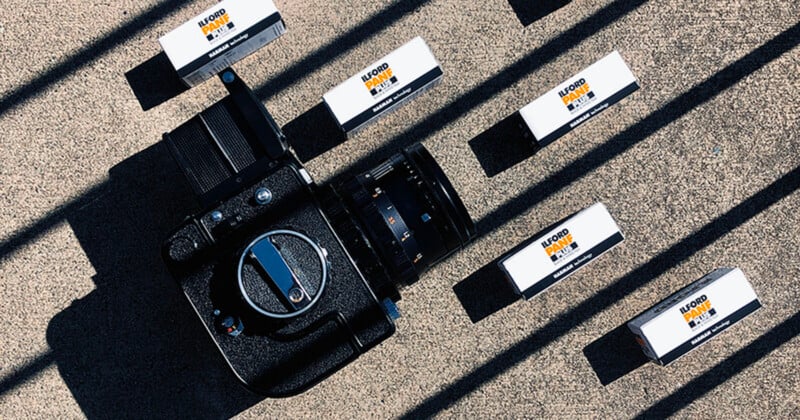
There is a certain clique of photographic films, let’s call it the “Sub-100 Club.” This is a group of films who flaunt ultra low ISO ratings below 100.
Generally, you find them hanging out, mildly aloof, near the corner of the room; often they’ll be on the opposite side of the crowd from where Delta and TMax P3200 can be seen holding court. These films have a mystique to them, and a bit of an allure. We have introduced other members of this group with past Film Fridays (see our other reviews such as for Cinestill 50D). This week we are featuring the grandparent of the group with Ilford Pan F+.

Ilford Pan F+ is the modern-day version of the original Pan F film: a panchromatic black and white emulsion introduced way back in 1948 — this is a film that has been around and seen a lot. It has enjoyed several updates through the decades, such as in 1992 when it was bestowed with the “+” suffix that still adorns its name to this day. Pan F+ has continued to evolve since that 1992 update and even as recently as the 2000s has experienced emulsion updates from Ilford. This kind of longevity should make Ilford Pan F more popular and well known than it is, but it instead caters to a more select, but no less passionate, group of photographers.


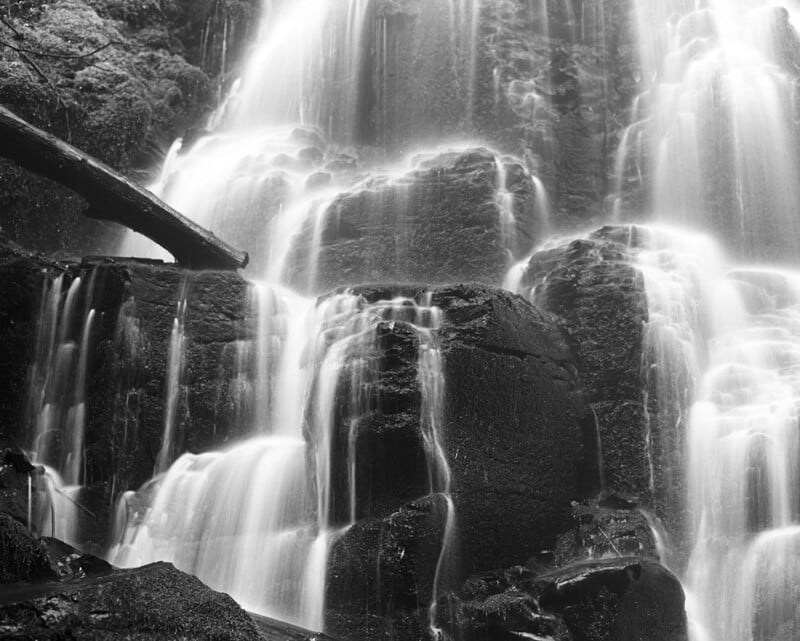
Summing up Ilford Pan F+ in a single sentence reads something like this: the film is incredibly fine grained, sharp, and dramatic, with a brooding and atmospheric character. Let’s start at the beginning of that list with the grain. As you would expect of such a low ISO film, Pan F+ has some of the finest grain on the market. Do you shoot 35mm and want images as clean as those of medium format? Go with Pan F+. Plan on doing mural-sized enlargements? That’s right, Pan F+ is the answer again.


Naturally, the trade-off for that fine grain is its slow speed. Pan F+ is a bright day kind of film. Or a tripod kind of film. Or a super fast lens kind of film. Then again, you could also look at its slow speed as opening up new, creative options that faster films don’t typically allow as easily, such as using handheld, slower shutter speeds during the day for interesting motion blur or panning effects or being able to shoot very fast apertures (think f/1.4) for shallow depths of field even in brighter conditions.

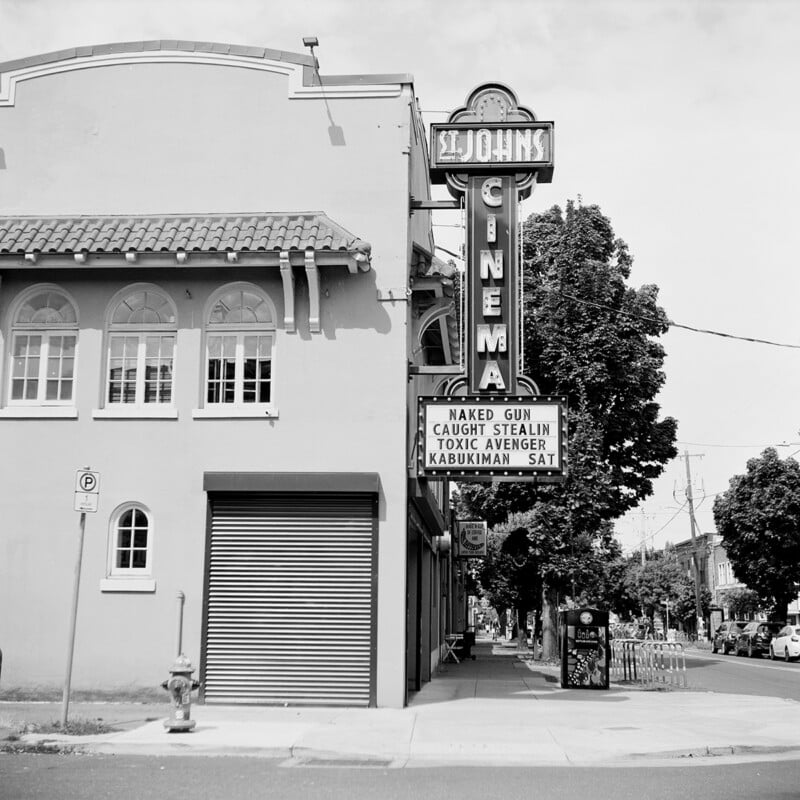
The second feature on that list is Pan F+’s high degree of sharpness. This is the result of several factors. First, that aforementioned fine grain certainly gives Pan F+ a boost when it comes to recreating fine detail. Second, the film is engineered to have high acutance, or edge sharpness. This is an increase of the local contrast at the boundaries between dark and light areas of image details. By increasing edge contrast, the film takes on the appearance of greater sharpness and clarity (though this by itself does not necessarily grant greater resolution). It is worth noting that acutance is often controlled mostly in the development process, with Rodinal or FX-2 being examples of high acutance developers. In the case of Ilford Pan F+, the film naturally has higher edge contrast, making it appear sharper.
If you like your black and white films to be crisp and rich with detail, then Pan F+ is a great choice to add to your rotation. In the past, it has been a favorite among architectural photographers for its great resolution. Some Pan F+ users say they don’t like it with portraiture for the same reason — it accentuates every wrinkle, line or blemish. On the other hand, if you make portraiture that celebrates the drama found in such features of the human face, then you’ll likely enjoy Pan F+.

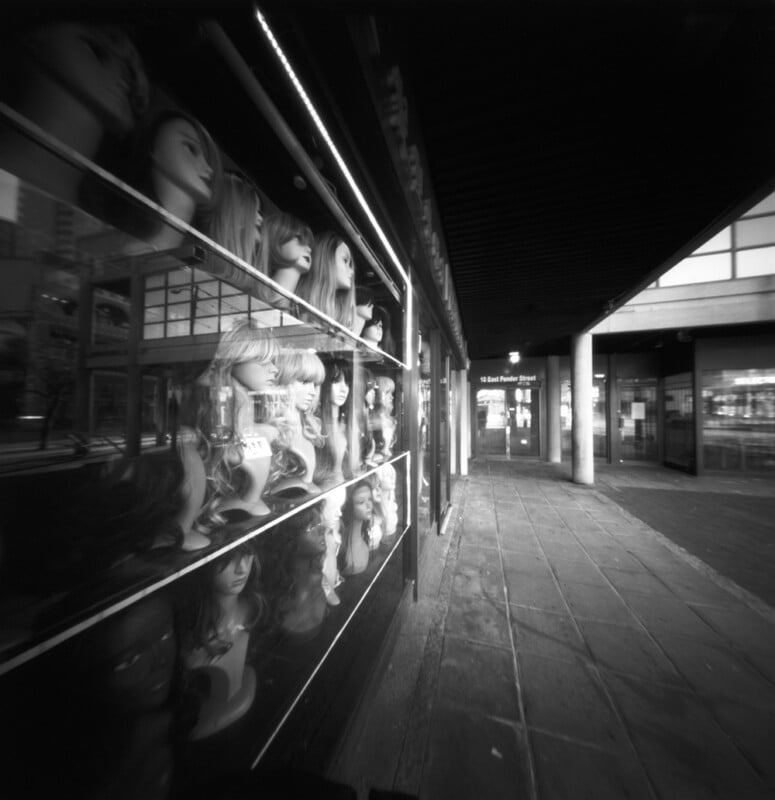
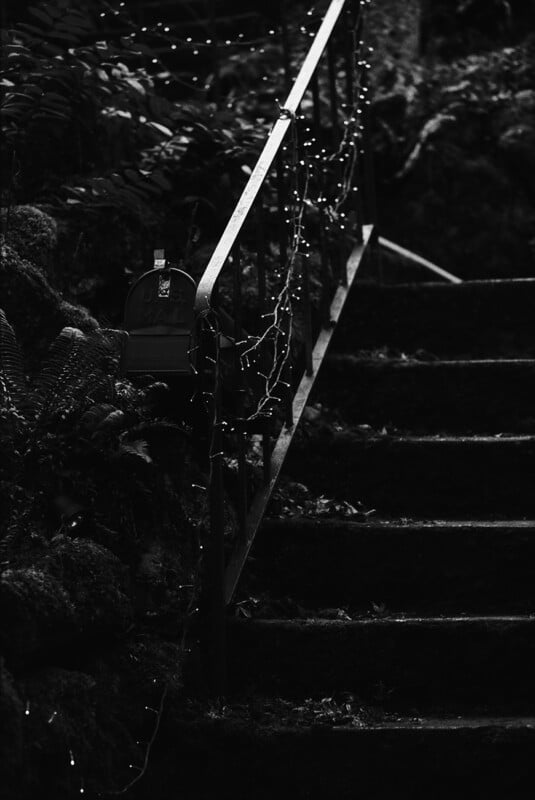
And thus we arrive at the third item on the list: Pan F’s moody drama. Pan F images are rich with contrast. They tend to have deep, inky shadows and bright, crisp whites. The film can border on a film noir look. Blacks tend to saturate the image, while even midtones seem to lean toward a darker mood. It’s not that Pan F has reduced tonality — there is plenty of nuance in its images to enjoy — but its contrast does lean toward the dramatic.
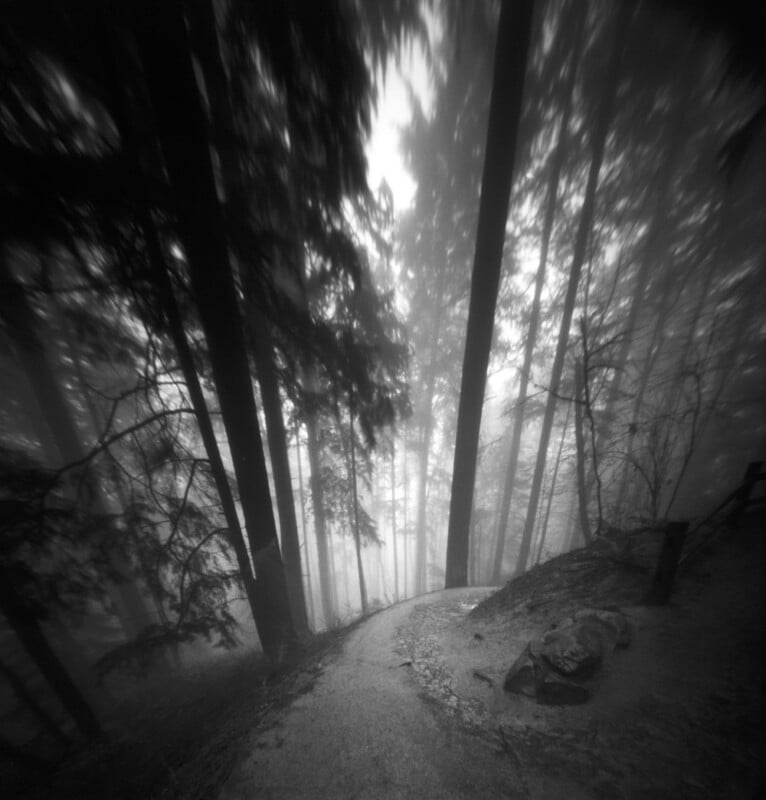
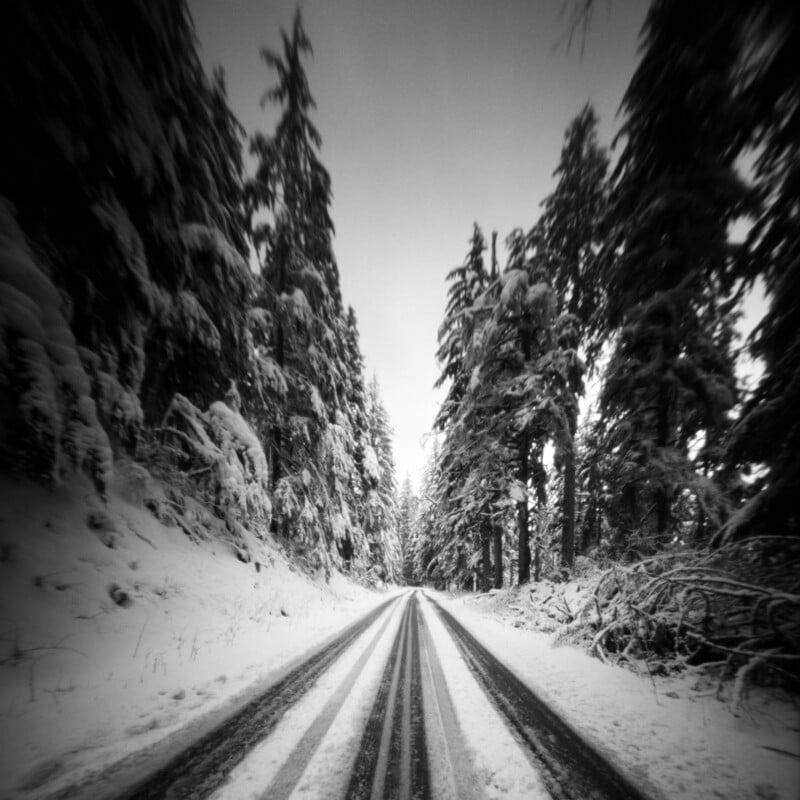
Over the decades, many different methods for developing Pan F have arisen to manipulate or control the film’s inherent contrast. Because of this, some will tell you that Pan F can be a tricky film to learn and one just as quick to burn you as it is to reward you. It may take a bit more getting used to than more forgiving films like the Ilford Delta or Kodak TMax films, but the upside to this is that Pan F has a bit of a mystery to it. Sure, it can be tamed with time and practice, or it can be left a bit wild. How you play that, is of course up to you.
Before we conclude this Film Friday, there are two other points we want to touch on quickly. The first involves reciprocity failure.
Being a slow speed film, it is quite likely that at some point you will be needing some long shutter speeds to achieve good Pan F exposures. Maybe you even bought the film to help stretch out those shutter speeds even longer. The Pan F+ of today has pretty reasonable reciprocity rates. With exposures between 1-10 seconds give the film 1/2 to 1 extra stop of exposure. For example, a 10 second exposure should really be 20 seconds.
After that, Pan F+ continues to slow down but does so fairly gradually, reaching the need for a full plus 2 stops of exposure right about a metered reading of 60 seconds (meaning you would need about 240 seconds of actual exposure for a good negative). This isn’t the greatest but it also isn’t the worst. We should point out that as recently as 2004, Pan F+ required much more compensation, needing 2 stops of overexposure as early as the 30 second mark. We are assuming that over the past decade and a half, Ilford has tweaked the emulsion to hold up better in lower light conditions. So don’t shy away from those long exposures with Pan F+, just make sure to compensate accordingly, especially if you are looking at one minute or longer times.

Lastly, Pan F+ has a history of not appreciating sitting undeveloped for long periods of time after exposure. Specifically, this film is known for poor latent image retention. Latent image retention is essentially the stability of the exposed, but undeveloped, film. Pan F is a film that if you shoot and process it right away, it won’t give you many troubles, however exposing a roll and then sitting on it for even a few months (or possibly even a few weeks) can lead to thin negatives that look like they are underdeveloped.
Our recommendation with Pan F+ is to finish it relatively quickly once you have made your first exposure and then promptly get it into the darkroom. Ilford states in their data sheet that the film should be developed within three months of exposure. The sooner the better, though.
And that concludes what we can tell you about the elder member of the Sub-100 Club. The rest we leave up to you to discern and discover, and we encourage you to try some Pan F+ out. It is a lovely film that is smooth, sharp, and has a touch of dark flair to it. Pan F images have a quality all their own.


The film is available in both 35mm and 120. Photographers for decades have been hoping for it to become available in 4×5 or 8×10, and in 2026 Pan F+ was finally released in both formats! It is a safe bet that we will always have some of it in stock.
Hit our website today, or visit our store in Portland, Oregon and we will have the film on sale with a special Film Friday discount!
This story is brought to you by Blue Moon Camera and Machine in Portland, OR. Blue Moon offers film, development services, printing, and even an ever-rotating line of film cameras and lenses. PetaPixel Members receive 10% off all lab services with Blue Moon: Join today!
Image creditsAll photos are individually credited and provided courtesy of Blue Moon Camera and Machine.
Affiliate Disclosure PetaPixel articles may include affiliate links; we may earn a commission if you buy through one.